If you are weighing remote vs in-person inspections, the hard part is not picking a side. The hard part is sorting out what actually changes and what absolutely does not. Remote can make inspections faster, safer, and easier to document, but it does not lower the bar for making a sound inspection decision.
Quick overview of remote vs in-person inspections
Here’s the plain answer up front: for most government agencies and CBOs, remote inspections are the better first option for routine, visible, low-risk work. In-person inspections still win when conditions are complex, hidden, sensory-dependent, or high stakes.
That matters because a lot of the debate gets framed the wrong way. Remote is often treated like a watered-down version of an inspection, while in-person is treated like the only “real” option. That framing misses the point. The delivery method changes. Your responsibility to verify conditions, apply standards, and make a defensible pass or fail call does not.
If your program handles repetitive checks, backlog pressure, long travel windows, or hard-to-reach sites, remote deserves a real place in your workflow. If your program regularly deals with concealed work, disputed conditions, unsafe structures, or anything that depends on touch, smell, ambient context, or physically moving through a site, in-person is still the right call.
What remote and in-person inspections actually are
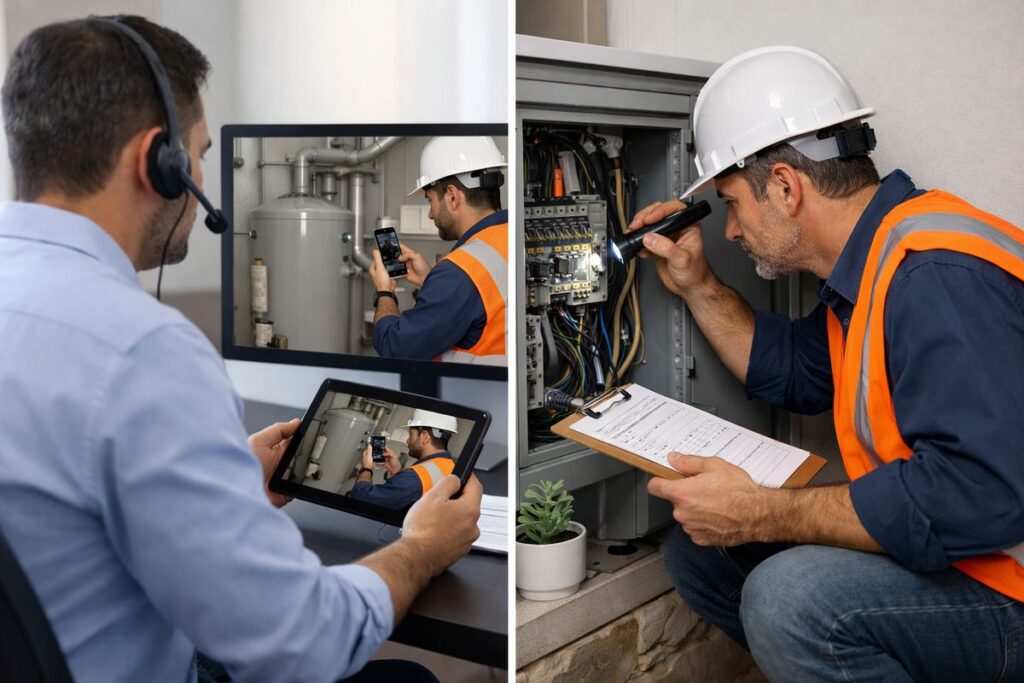
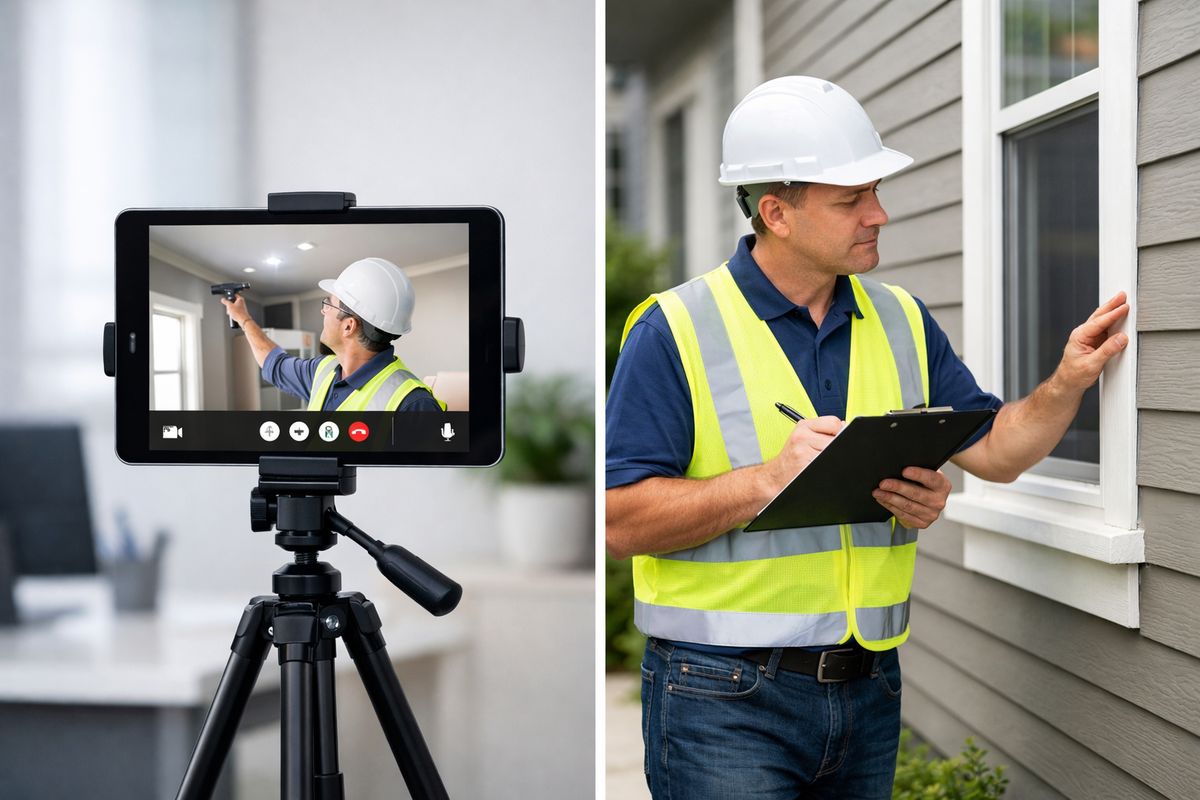
A remote inspection is not just a video call. It can include live video walkthroughs, still photos, recorded video, documents, measurements, mobile app submissions, and purpose-built platforms that organize all of that evidence in one place. In many programs, the person on site uses a phone or tablet while the inspector directs the view, asks for specific proof, and decides whether enough evidence exists to make a determination.
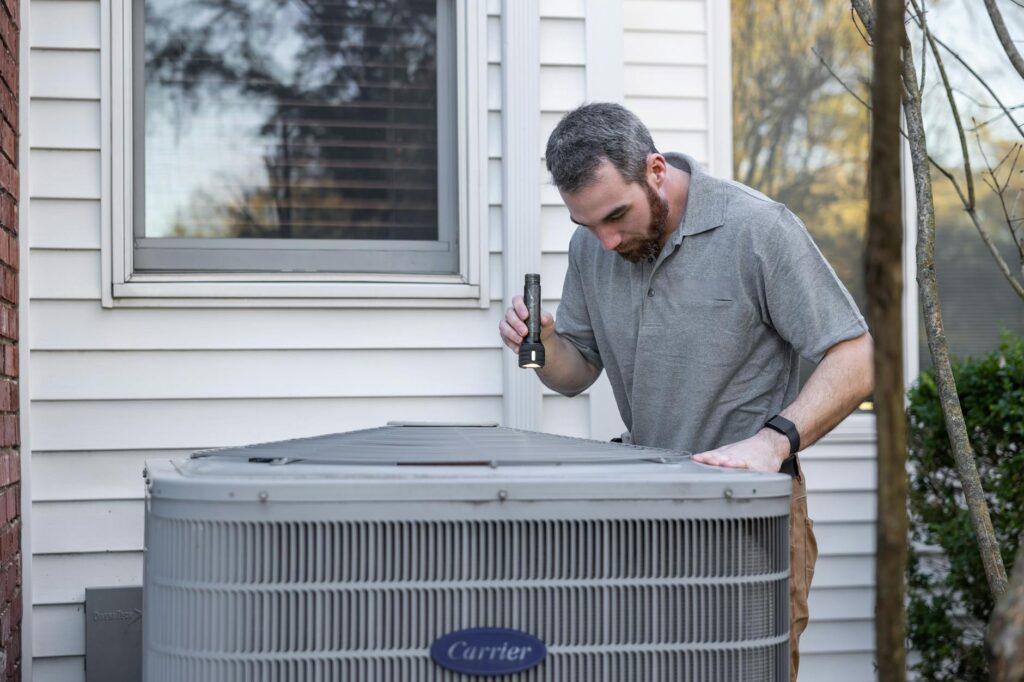
An in-person inspection is the traditional site visit. You travel to the location, observe conditions directly, move around the environment yourself, ask questions on the spot, and capture notes or photos as needed.
That distinction sounds obvious, but it shapes everything that follows. Remote depends on mediated evidence. In-person depends on direct observation. One is not automatically better than the other. The trick is matching the method to the work.
If you want a plain-English look at how camera-based review works in agency settings, this overview of seeing the process through a screen helps ground the basics before you get into policy choices.
The big picture: what changes and what stays the same
The biggest changes are practical. Remote cuts travel, tightens scheduling, expands access, reduces some safety exposure, and usually creates a cleaner digital trail. That is where remote earns its keep.
The biggest constants are professional. Standards stay the same. Evidence still needs to support the decision. Inspector judgment still drives the outcome. Pass or fail criteria do not suddenly soften because the inspection happened through a phone camera.
That split is the useful one. If you expect remote to replace every on-site visit, you will be disappointed. If you treat remote as a tool for the right inspection types, you can move a lot faster without losing control of quality.
Speed and scheduling
This is where remote usually wins, clearly and quickly. When travel disappears, scheduling gets easier almost immediately. Shorter appointment windows become possible, inspectors can move from one inspection to the next without windshield time, and reschedules do not burn half a day.
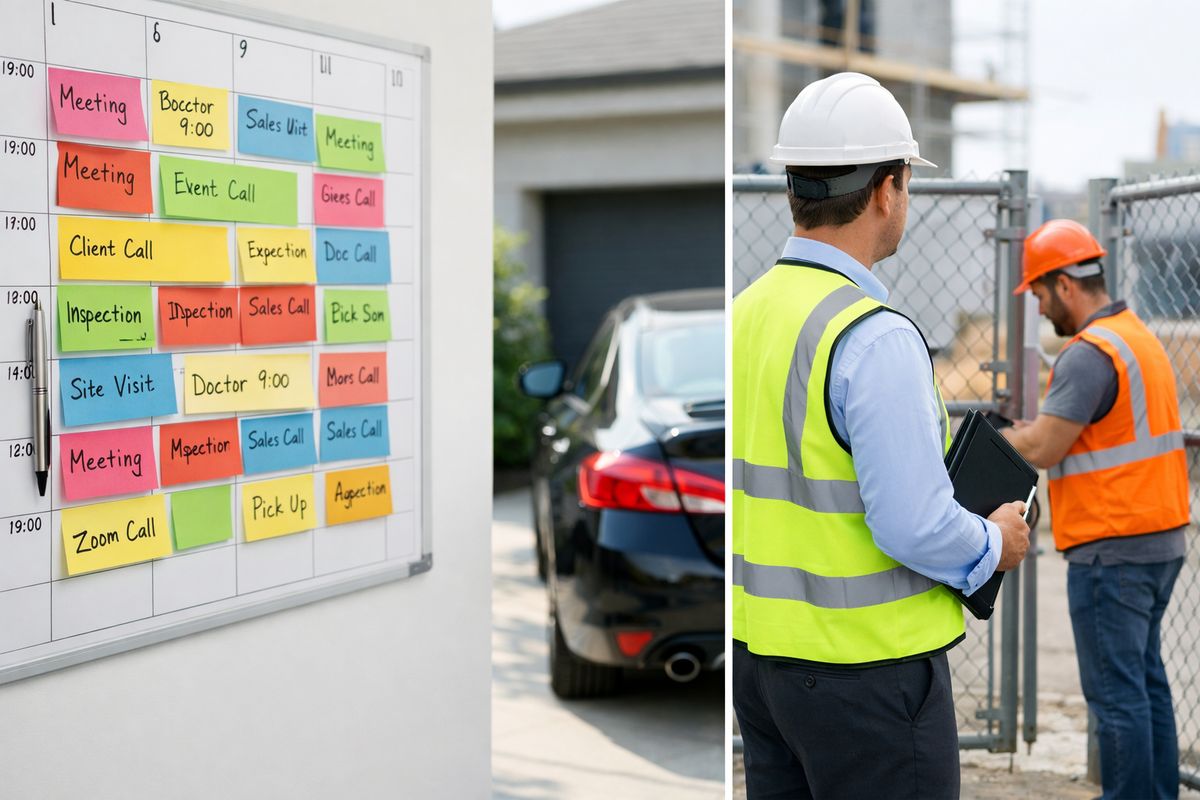
For agencies dealing with heavy permit volume or recurring inspections, that matters more than any feature checklist. In-person inspections often get slowed by traffic, building access, parking, site contact availability, and the classic problem where a five-minute inspection eats up two hours on the calendar. Remote removes a lot of that friction.
That does not mean every remote inspection is fast. Bad connectivity, weak prep, and unclear views can drag things out. But when the scope is a good fit, remote is usually the faster option by a wide margin.
Where remote inspections save the most time
Travel elimination is the obvious gain, but not the only one. Remote also makes tighter booking windows possible because you are not padding for traffic, elevator delays, gated entry, or crossing a large jurisdiction from one site to another.
The throughput gains can be substantial. A California policy analysis reported that inspectors handling remote virtual inspections could complete 50% more inspections than inspectors doing site visits, largely because travel vanished from the workflow. San Diego also reported more than 40 hours a week saved for inspectors through reduced travel and scheduling gaps.
That kind of result is not magic. It is just what happens when you stop turning every short inspection into a field trip.
Where in-person inspections still slow things down
In-person work carries hidden time costs that everyone feels but few workflows truly account for. Drive time is the obvious one. Access delays are another. Then you get the site coordination problems: the wrong person is present, a unit is locked, the equipment is not exposed, or the contractor is still finishing something that was supposed to be ready at 10:00 a.m.
A California example captures the problem well. Contractors reported waiting 2 to 6 hours for inspections that only take 5 to 15 minutes, according to inspection delay reporting. That is why backlogs grow even when inspection durations themselves are short.
Inspection quality and what gets missed
This is where the conversation needs more honesty. Remote can work very well, but it is not equally good for every kind of observation. If the inspection is mostly about visible, standardized, clearly framed conditions, remote can hold up nicely. If it depends on noticing subtle context, sensing something off, or physically checking hard-to-see areas, in-person still has the edge.
A screen narrows your field. Even with good video, you only see what the camera shows, from the angle it shows, under the lighting available. That is enough for some tasks and not enough for others.
When remote performs well
Remote performs best when the work is visible, routine, low risk, and easy to verify through structured evidence. Think drywall, siding, insulation, window replacements, equipment labeling, simple retrofit checks, and similar scopes where what matters can be clearly shown.
This is one reason many jurisdictions limit remote to suitable inspection types instead of forcing it onto everything. In those narrower lanes, results can be strong. San Diego and Los Angeles County both reported little to no meaningful difference in pass or fail outcomes when remote inspections were limited to the right kinds of work.
The pattern is simple: if a camera can reliably show the condition and your standards are clear, remote can do the job.
When in-person has the edge
In-person wins when the work depends on physical presence in ways a camera cannot fully copy. Maybe you need to inspect concealed conditions. Maybe the issue is environmental context, smell, vibration, moisture, airflow, sound, sequence, or access to awkward spaces. Maybe the site is cluttered, active, damaged, or disputed.
That is where being there matters. You can change position instantly, widen the frame without asking someone else, inspect adjacent conditions, and pick up on details that never make it into a directed video walkthrough. It is like the difference between seeing a kitchen in a listing photo and actually standing in it. One shows enough. The other tells you what the place is really like.
What the research says about violation detection
The best caution flag comes from compliance auditing research. A Harvard Business School study, summarized by Harvard, found that remote audits detected 25% fewer violations on average than in-person audits. For issues tied mainly to direct observation, the drop was even sharper, at 59%.
That does not mean remote inspections are unreliable across the board. It means quality falls off fastest when the task depends on using your senses and observing context directly. Document-heavy reviews held up better than observation-heavy ones, though even those showed some decline.
Safety and site access
Remote changes the safety picture in a very practical way. Fewer site visits means less exposure to traffic, unstable conditions, active work zones, occupied units, scaffolding, confined spaces, and other routine hazards. For hard-to-reach or unsafe areas, remote is not just convenient. It can be the safer choice.
That said, safety is not only about keeping people out of harm’s way. It is also about avoiding false confidence. If your remote view is incomplete and a serious issue goes unverified, that creates a different kind of risk.
Remote inspections in hazardous or inaccessible areas
This is one of the strongest use cases for remote methods. Research on remote inspection techniques in surveying highlights reduced need for scaffolding, better access to confined or dangerous spaces, and lower exposure in hard-to-reach areas through safer remote methods. In practical terms, that can mean fewer unnecessary climbs, fewer site entries, and fewer people standing around active work.
For agencies dealing with damaged structures, infrastructure assets, or locations spread across a large geography, access is often the real bottleneck. Remote helps you inspect where getting there is the hardest part.
When physical presence is still the safer choice
Sometimes the safer choice is the one that gives you better certainty. If image quality is poor, lighting is bad, the walkthrough is confusing, or the person on site cannot follow directions well enough to show the condition clearly, remote becomes risky in a different way.
That is when an on-site visit protects the integrity of the outcome. If the condition matters enough, uncertainty is its own hazard.
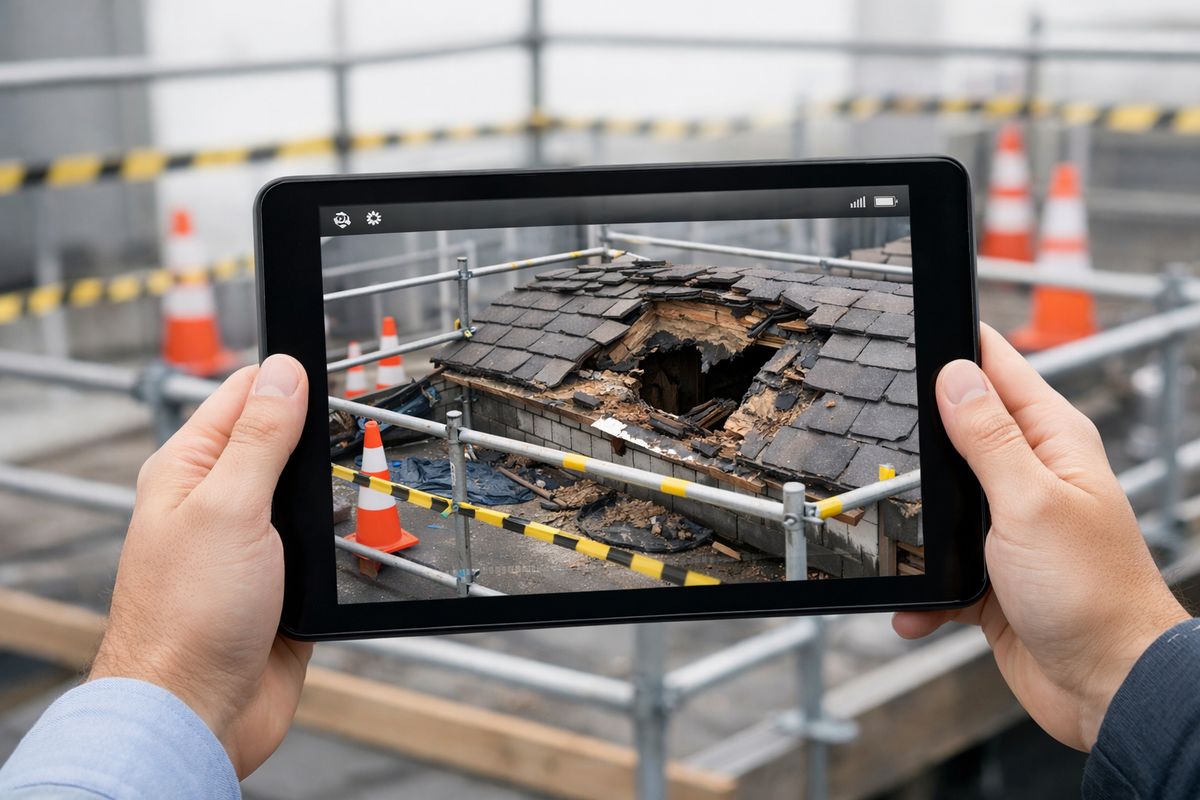
Documentation and audit trail
Remote often produces better records almost by accident. Because the process relies on shared evidence, it tends to create timestamps, saved images, recorded video, message history, and clearer follow-up notes as part of the workflow itself.
In-person inspections can absolutely be documented well. But in practice, the record often depends more heavily on field notes, manually captured photos, and what got written down after the inspector left the site. Remote systems push more evidence into the record from the start.
Why remote often creates a stronger digital record
A strong remote process leaves tracks. You know what was submitted, when it was submitted, what was shown live, and what follow-up was requested. That can make later review much easier, especially when a decision is questioned.
This is also where software matters. A generic video tool may get the job done for a one-off situation, but it usually falls short on evidence organization, auditability, and retrieval. If you are comparing tools, this guide to what public teams should look for in a platform gets into the pieces that make documentation usable instead of messy.
What in-person documentation still does well
In-person documentation has one real advantage: the inspector controls the viewing experience directly. Notes can capture context that a camera never recorded, and photos can be taken from exactly the angle needed without coaching someone else.
The catch is consistency. Unless your process is tightly standardized, on-site documentation can become uneven from one inspector to the next. Remote tends to force a little more structure, which is often good for defensibility.
Technology and equipment requirements
Remote inspections only feel simple when the setup works. Stable internet, a decent camera, clear audio, enough light, and basic user readiness are not nice extras. They are the floor.
In-person inspections have fewer technical dependencies, but that does not make them frictionless. Instead of camera quality and signal strength, your constraints are travel, site access, parking, building entry, and coordination with whoever needs to be present.
What remote inspections require to succeed
Remote works best when the site is prepped before the appointment starts. Required areas should be accessible. Lighting should be good enough to see details clearly. The person on site should know what needs to be shown and how to frame it. A stable connection matters because dropped video at the wrong moment is not just annoying, it can break the inspection.
A capable platform matters too. You need evidence capture, organization, and retention built into the process. For agencies, that also means thinking through security basics for inspection systems before rolling anything out widely.
What in-person inspections require instead
Traditional inspections depend less on resident or contractor tech readiness, which is a real advantage. You can still get the job done in places with poor connectivity or limited device access.
But you pay for that flexibility elsewhere. Travel logistics, access coordination, missed windows, and field inefficiency become the operational burden instead of tech prep.
Inspector judgment and decision-making
The format changes. Your judgment does not.
That point gets lost surprisingly often. A remote inspection does not turn the inspector into a passive viewer. If anything, it demands more active direction. You have to ask for better angles, request closer views, verify measurements, notice what is not being shown, and decide when the evidence is enough.
What stays the same in both methods
The core work remains the same in either format: interpret the applicable standard, evaluate the evidence, decide whether conditions meet requirements, and call for correction or more information when needed.
Authority stays with the inspector. A remote process should never strip out the ability to fail an inspection, defer a decision, or require an on-site follow-up. The benchmark for compliance should stay equivalent.
Why remote needs even tighter judgment calls
Remote adds one more layer of decision-making: sufficiency. You are not only deciding whether the site condition passes. You are also deciding whether the evidence is good enough to support that conclusion.
That means stronger escalation instincts matter. If a view is obstructed, a sequence looks off, or the context is missing, you need a clean rule for stopping the remote process and moving on site. That is one reason accuracy in camera-based review depends as much on process discipline as it does on image quality.
Scope and inspection suitability
This is where a lot of programs get tripped up. The real decision is not remote or in-person in the abstract. It is which scopes belong in which lane.
Once you sort inspections by risk, visibility, complexity, and evidence type, the answer gets much clearer.
Best-fit use cases for remote inspections
Remote is a strong fit for routine, visible, low-risk, repeatable inspections where camera-based verification can clearly show the required condition. It also works well when documentation already carries much of the review, or when speed and access are the main operational pain points.
If you want examples grounded in agency work, this list of where remote fits best in public programs is a useful extension of that logic.
Best-fit use cases for in-person inspections
In-person is the better fit for complex, high-risk, concealed, disputed, sensory-dependent, or unusual conditions. If the issue depends on being there, go there. If failure carries significant life-safety or liability consequences, go there. If you already know the remote view will be partial, skip the false economy and schedule the site visit.
Why a hybrid model often works best
For most agencies and CBOs, the best model is not ideological. It is selective. Use remote for first passes, routine verifications, and suitable low-risk scopes. Use in-person for escalations, exceptions, concealed work, unclear evidence, and final judgment where direct observation is necessary.
That approach gives you the speed benefits of remote without pretending every inspection belongs on a screen.
Consistency, standards, and compliance
Remote should not be treated as a lower standard. The method can change while the compliance benchmark stays the same.
That sounds simple, but it has real policy implications. If your remote workflow allows weaker evidence, fuzzier eligibility, or informal exceptions, you are not running the same inspection in a different format. You are running a different standard.
Same standard, different delivery
The research and regulatory guidance point in the same direction: remote inspections should be equivalent in standard, not second-tier. During COVID, agencies used remote methods to keep oversight going when on-site inspections were disrupted, but the goal was still to validate conditions and maintain quality, not lower expectations.
The cleanest policy position is straightforward: if the evidence supports the same decision standard, remote is acceptable. If it does not, the inspection goes on site.
Why policies need clear guardrails
A good remote policy spells out eligibility, required evidence, acceptable technology, escalation triggers, documentation rules, and the inspector’s authority to require an in-person visit at any point.
Without those guardrails, remote can drift into inconsistency. One inspector tolerates poor video, another does not. One contractor submits complete proof, another sends three blurry photos and hopes for the best. Clear rules fix that.
Participation and communication during the inspection
Remote changes who can join and how easily. That is one of its underrated strengths. Bringing in contractors, property staff, specialists, or program stakeholders is much easier when nobody has to drive across town for a ten-minute verification.
Still, easy participation is not the same as clear communication. A crowded call can create confusion if roles are not defined.
How remote can widen participation
Remote makes it easier to include the right people at the right moment, especially when schedules are tight or sites are far apart. A contractor can walk the space, a supervisor can join briefly, and another reviewer can observe without the usual coordination headache.
That extra visibility can help on training, consistency, and faster issue resolution. It is one reason remote often works well in larger programs with distributed teams.
How in-person can reduce ambiguity
In-person still wins when the site is messy, cluttered, active, or confusing. Being physically present makes it easier to point, reposition, compare adjacent conditions, and clear up misunderstandings fast.
Sometimes that matters more than convenience. If you have ever tried to explain “show the top left corner behind the conduit” through a shaky phone feed, you know the difference.
Pricing and operational costs
The cost comparison is not just software versus mileage. It is total operating impact.
Remote can lower travel costs, improve inspector utilization, cut standby time, and help reduce backlog. But it also introduces software licensing, device support, training, connectivity troubleshooting, process design, and data management costs. In-person avoids some of those, yet burns more field time and often creates hidden labor waste around scheduling.
Where remote can lower costs
The biggest savings usually come from reduced travel and better throughput. If inspectors spend less time in transit and more time inspecting, capacity goes up without adding headcount. Programs under backlog pressure feel this first.
Contractors and site contacts may save money too. Less waiting around for broad arrival windows means less standby labor and less disruption to the day.
Where remote adds costs
Remote is not free speed. You need software, support, policy work, onboarding, and clear operational standards. Device quality matters. Connectivity matters. Data retention and privacy matter.
For agencies, this is also where procurement requirements show up. If you are evaluating tools, it helps to compare your process against what public-sector teams usually need from inspection software before you assume any video platform will do.
Where in-person still makes financial sense
Some inspections are cheaper on site because the remote alternative would fail halfway through, require repeated submissions, or end in a second visit anyway. If the scope is complex enough, one decisive in-person inspection may cost less than a remote attempt plus escalation.
That is the catch with cost analysis: the cheapest method is the one that gets you a reliable answer once.
Adoption trends and what changed after COVID
Remote inspections surged because programs had to keep moving when travel and site access broke down. During the pandemic, remote inspections became a practical continuity tool in regulated settings, not a side experiment.
After restrictions eased, plenty of programs moved back toward in-person work. That was not a sign remote failed. It was a sign that on-site inspection still fits a lot of real-world tasks better.
Why remote inspections surged
When COVID disrupted access, agencies used remote methods to keep oversight moving, validate submitted information, and maintain operations under restricted conditions. In Europe, remote inspections climbed to about 20% of total inspections between April and August 2020 before dropping again later that year.
That period proved something important: remote was workable at scale when needed.
Why in-person remains the default in many programs
Once access reopened, many programs returned to site visits because on-site inspection still gives fuller context and stronger confidence for many scopes. Some regulatory reviews also noted that in-person inspections would likely remain the preferred standard for the foreseeable future, even as risk-based remote methods stay in the toolbox.
So yes, remote is established. No, it is not a total replacement.
What this means for your program now
The practical takeaway is simple. Treat remote as a proven option, not an experimental workaround. But use it selectively inside a risk-based program.
That means defining where it fits, where it does not, and what triggers escalation. Not glamorous, but that is how you get consistent results.
When to choose remote inspections
Choose remote when the work is routine, visible, low risk, and easy to verify through camera-based evidence. Choose it when travel or access is the main problem. Choose it when faster scheduling will meaningfully improve service levels without weakening the inspection result.
Remote is especially useful when your alternative is not a better inspection, but a delayed one.
A quick checklist for remote readiness
Use remote when these basics are true:
- The condition is clearly visible
- The scope is low risk and standardized
- Required areas are accessible
- The site has stable connectivity
- The device camera and audio are usable
- Participants know what to show
- Evidence capture rules are clear
- The inspector can switch to on-site if needed
When to choose in-person inspections
Choose in-person when complexity, uncertainty, or consequence goes up. If direct observation is central to the decision, do not fight that fact. Schedule the visit.
This applies to concealed work, hazardous conditions, disputed findings, poor connectivity, unusual site conditions, and anything where a remote view is likely to leave real doubt.
Red flags that should trigger an in-person visit
An on-site visit should be triggered when you see any of the following:
- Poor image quality
- Obstructed or incomplete views
- Safety concerns at the site
- Concealed work or hidden conditions
- Inconsistent or conflicting evidence
- Complex code interpretation
- Confusion during walkthrough
- Failed remote attempt
Verdict: which one wins?
Remote wins on speed, reach, documentation, participation, and many routine inspections. In-person wins on complexity, sensory observation, contextual awareness, and high-risk work.
So which one should your agency or CBO choose? Not all-remote. Not all in-person. The best choice is a policy-backed hybrid model that makes remote the first option when fit is clear and keeps in-person available whenever evidence, risk, or site conditions demand it.
That is the version that actually works in practice. It respects your inspectors’ judgment, protects standards, and gives your program room to move faster without pretending every inspection is the same.
Frequently Asked Questions
Are remote inspections considered lower quality than in-person inspections?
Not by default. Remote inspections should be held to the same inspection standard. The difference is that some scopes are a better fit for remote than others, so quality depends heavily on choosing the right use cases and requiring strong evidence.
What kinds of inspections are usually best for remote?
Routine, visible, low-risk, and standardized inspections are the best fit. Drywall, siding, insulation, window replacements, simple retrofit checks, and similar scopes often work well when visibility is clear and documentation is structured.
When should a remote inspection be changed to in-person?
Switch to in-person when the video is unclear, the site is hard to navigate remotely, required areas are concealed, evidence conflicts, safety concerns are present, or the decision depends on direct sensory observation.
Do remote inspections save money?
Often, yes, especially when travel, scheduling delays, standby labor, and backlog are major costs. But savings depend on process quality. A bad remote workflow that leads to repeat attempts or follow-up visits can erase the advantage.
What matters most when choosing remote inspection software?
Evidence capture, audit trail, ease of use, security, privacy controls, and clear workflow support matter most. A tool should help you organize the inspection, not just host a video call.
Can remote inspections replace all in-person inspections?
No. Remote is a strong option for the right scopes, but some inspections still require physical presence to verify conditions reliably. A hybrid model is the more durable approach.
If you are ready to test a hybrid approach in real workflows instead of debating it in theory, start with a Blitzz Trial and see how remote inspections perform when the scope, evidence, and policy fit are actually aligned.